Wedding Photography Styles Explained.
Wedding photography styles are easiest to understand through two questions: how does the photographer behave while making the image, and what does the finished photograph look like?
Those questions are related, but they are not identical. A photographer can work quietly during a first dance and still produce a polished, editorial-looking frame. Another can give detailed direction during portraits and edit with completely natural color. “Documentary” describes an approach more than a color palette. “Fine art” often describes visual intention more than how much a photographer intervenes.
Most couples do not need to choose one label for the entire day. They need to decide when they want to be observed, when they want guidance, how formal the essential group photographs should feel, and what visual point of view they want across the complete gallery.
Wedding photography styles at a glance
| Style | What the photographer usually does | What a first dance may look like | What a family portrait may look like | Main risk |
|---|---|---|---|---|
| Documentary | Observes, anticipates, and intervenes very little during real events | Movement, reactions, context, and imperfect moments left intact | May happen only if planned, with minimal arranging | Important people or requested groups can be missed if “candid” becomes passive |
| Photojournalistic | Uses a documentary approach with extra emphasis on truthful event coverage and sequence | The dance plus parents, friends, room, and reactions that explain the moment | Clearly documented if it occurs, but not heavily stylized | The term can be used loosely without true consistency |
| Fine art | Prioritizes composition, light, tone, and a carefully curated visual result | A clean, atmospheric frame with deliberate light and negative space | Balanced, polished, and visually restrained | Beauty can outrank pace or emotional completeness |
| Editorial | Directs with fashion and magazine influences when the moment allows | A strong angle, intentional light, and possibly a brief directed portrait near the dance | Confident posture, deliberate spacing, and a composed frame | Too much production can make the couple feel as if they are performing all day |
| Traditional posed | Organizes people clearly and prioritizes recognizable milestone photographs | A centered, face-visible record of the dance and other formalities | Symmetrical, camera-aware, and carefully arranged | The day can feel rigid if the approach never relaxes |
These are tendencies, not laws. The same photographer may work in three or four of these modes before dinner.
What is documentary wedding photography?
Documentary wedding photography focuses on what actually happens. The photographer watches relationships, anticipates moments, and avoids staging real events for the camera.
During a ceremony, a documentary photographer may notice a sibling squeezing a parent's hand, a friend laughing during a reading, or the couple's reaction after an unscripted mistake. They do not ask anyone to repeat it. During cocktail hour, they follow conversations and gestures instead of moving guests into better light every few minutes.
Documentary does not mean careless, invisible, or allergic to portraits. It also does not mean every image is grainy, black and white, tilted, or emotionally dramatic. Those are aesthetic choices. The documentary principle is simpler: do not interrupt a real moment merely to improve the photograph.
What does a first dance look like in a documentary style?
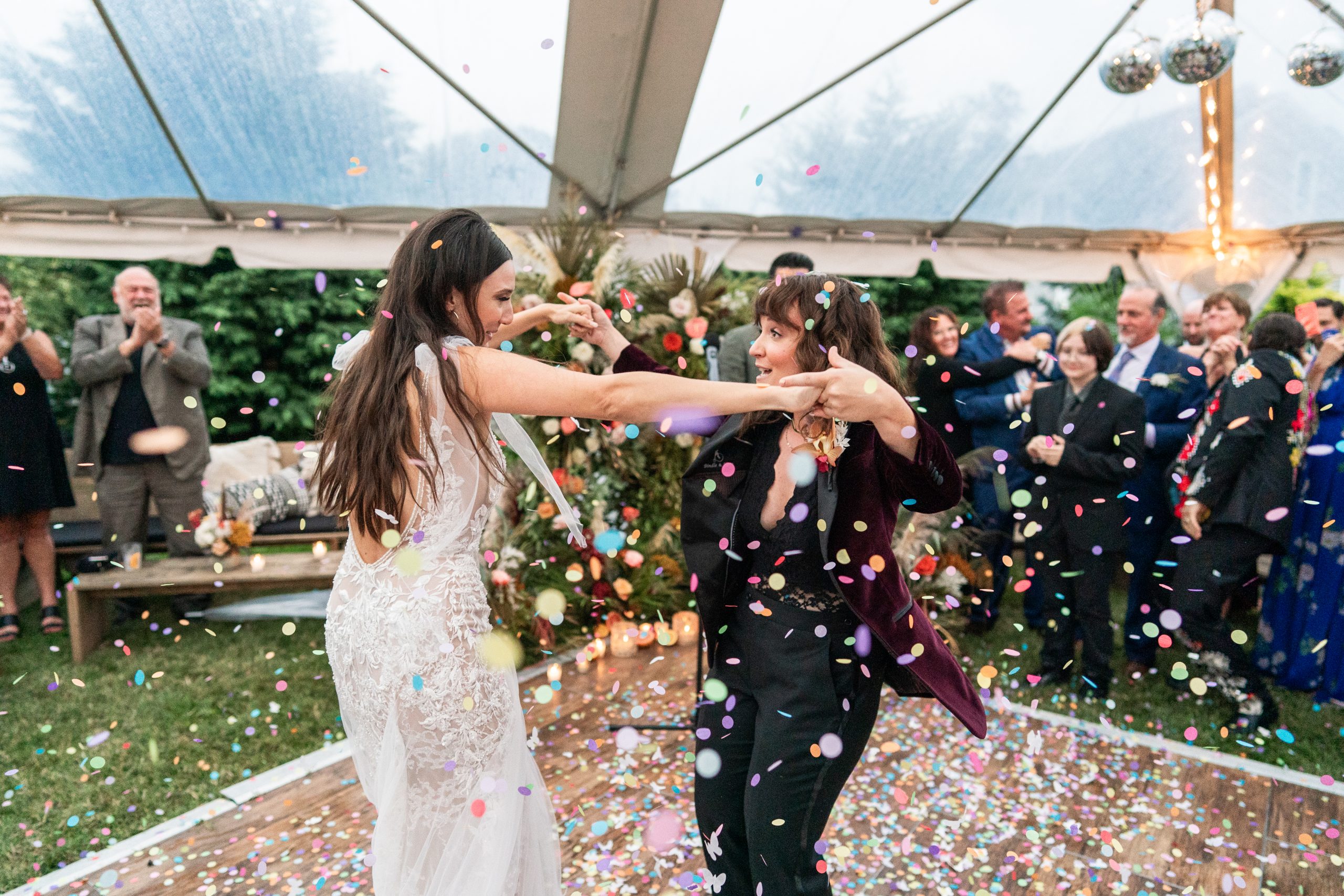
The gallery may include the couple moving through the full song, the room around them, hands and expressions, parents watching, friends singing along, and the transition when the dance floor opens. A technically imperfect laugh may matter more than a perfectly centered pose.
What does a family portrait look like in a documentary style?
Here is the limit couples need to understand: a formal family portrait does not spontaneously occur because the photographer is observant. If you want a clear photograph of both families looking at the camera, someone must gather and arrange them.
A documentary photographer may keep the direction quick and natural, but the photograph is still organized. Pure observation cannot create a group that never stood together.
Is photojournalistic wedding photography different from documentary?
In wedding marketing, documentary and photojournalistic are often used interchangeably. Both imply observation, timing, and truthful coverage rather than staging.
The small distinction is emphasis. Photojournalism comes from a tradition of reporting events accurately and building meaning through individual frames and sequence. Documentary photography is a broader term that can include a more personal or interpretive long-form view.
For most couples, the practical difference between the labels is not important. The useful questions are:
- Does the photographer stage moments and present them as candid?
- Will they direct portraits when we need help?
- How do they make sure important people are represented?
- Can we see a full gallery where the approach stays consistent all day?
If a photographer says “photojournalistic” but shows a portfolio built mostly from directed portraits, believe the work more than the label.
What does a first dance look like in a photojournalistic style?
The photographer looks for the image that explains what happened, not only the cleanest photograph of the couple. A wide frame may establish the room. A close frame may show tension in a hand. A reaction photograph may reveal more than the dance itself.
What does a family portrait look like in a photojournalistic style?
If family formals are part of the timeline, they are documented clearly and efficiently. The photojournalistic element appears more strongly around the formal portrait: the grandparent arriving, siblings joking between combinations, or a parent taking a breath after the group separates.
What is fine-art wedding photography?
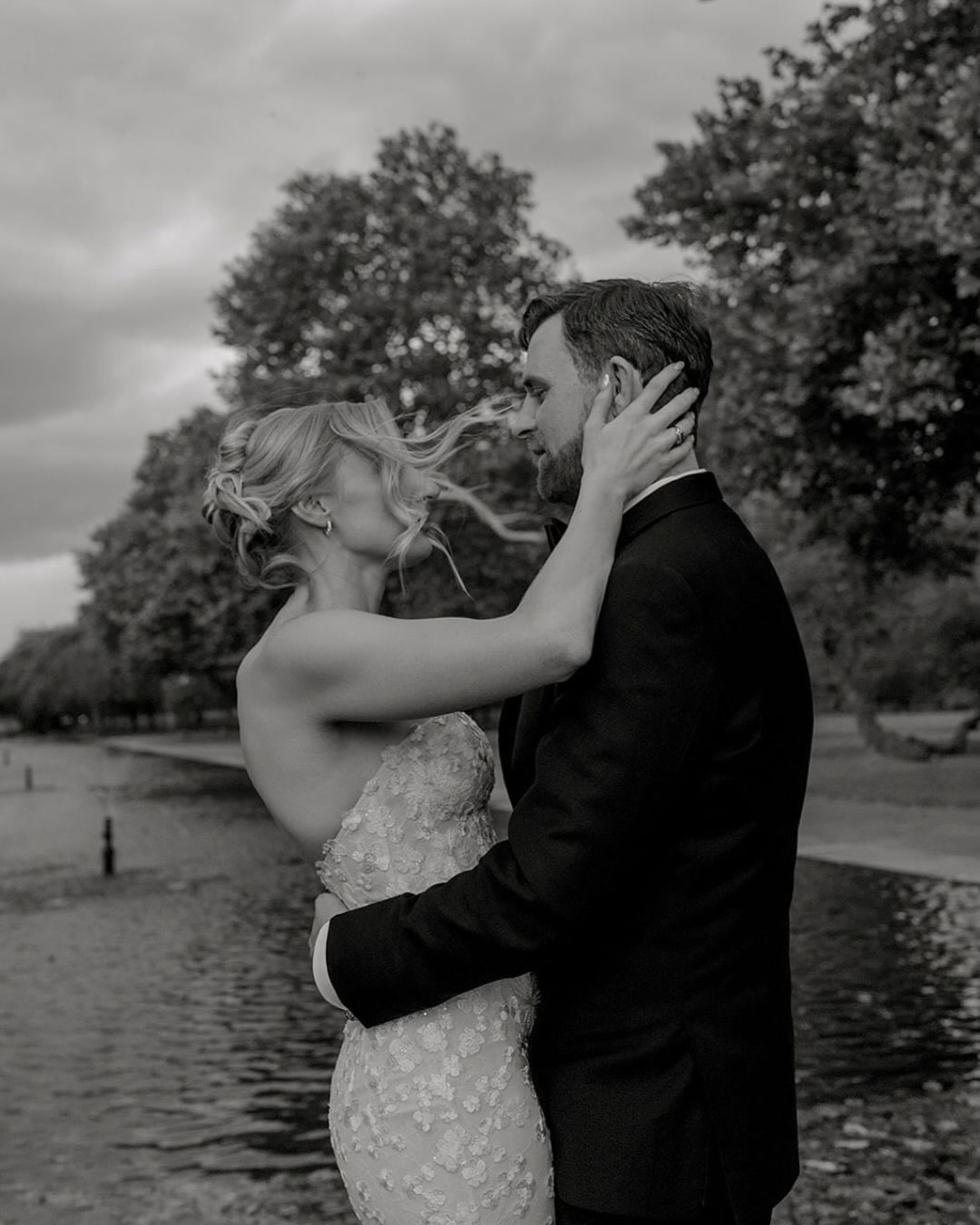
Fine-art wedding photography prioritizes visual authorship. Light, composition, color, tone, texture, and the relationship between images are treated with unusual care. The finished gallery often feels highly curated.
The term does not automatically mean bright film tones, pale colors, soft focus, or luxury styling. Those aesthetics became associated with fine-art weddings, but the underlying idea is intentional image-making. Fine art can be dark, colorful, minimal, or strange.
A fine-art photographer may wait for cleaner light, simplify a background, move a detail, or create more time for a portrait. They may also deliver fewer near-duplicates because the edit itself is part of the work.
What does a first dance look like in a fine-art style?
The photographer may use symmetry, negative space, reflection, architecture, or controlled light to make one visually resolved frame. The surrounding reactions may still appear, but the finished selection often favors photographs that hold together aesthetically.
What does a family portrait look like in a fine-art style?
Expect balance, clean spacing, careful posture, and attention to the background. The photograph may feel formal without looking old-fashioned. Creating it can take longer than a quick record because small visual choices matter.
What is editorial wedding photography?
Editorial wedding photography borrows from magazines, fashion, portraiture, and visual storytelling. It is usually more directed than documentary work and often more energetic than traditional posing.
The photographer may choose a strong location, build a composition, adjust posture, create movement, or repeat a simple action. Good editorial direction gives the couple something understandable to do. Bad editorial direction makes them feel as though they have been hired to play more glamorous versions of themselves.
Editorial does not require a luxury venue or designer wardrobe. It requires intention, confidence, and a reason for the direction.
What does a first dance look like in an editorial style?
The dance itself may remain documentary because repeating it would break the event. The photographer may use a deliberate vantage point, strong flash, foreground guests, or architectural lines to make the frame feel designed. They might also create a separate, brief portrait on the empty dance floor before guests enter.
What does a family portrait look like in an editorial style?
The group may be arranged with more shape and personality than a straight row. Posture, hand placement, levels, spacing, and expression receive clear direction. The result can feel confident and modern, but it needs enough time and willing participants.
What is traditional posed wedding photography?
Traditional wedding photography prioritizes clear, recognizable coverage of the people and milestones a family expects to remember.
The photographer directs where people stand, asks them to look toward the camera, and makes sure essential combinations are completed. They may center key moments, use consistent flash, and favor images where faces are visible and expressions are readable.
Traditional is not an insult. A well-made photograph of a couple with their parents is valuable precisely because it is straightforward. The problem appears only when the entire wedding is treated as a sequence of formal setups.
What does a first dance look like in a traditional style?
The photographer prioritizes a clear view of the couple, reliable exposure, and complete coverage of the formal moment. The frame may be centered and evenly lit, with less emphasis on partial views, motion blur, or surrounding visual chaos.
What does a family portrait look like in a traditional style?
Everyone is clearly arranged, facing the camera, and visible. The photographer checks clothing, spacing, height, and expressions. The photograph is meant to remain legible decades later, even to someone who was not at the wedding.
Which wedding photography style fits your personality?
If you freeze when a camera appears
You probably do not need a photographer who promises to say nothing and “just let you be natural.” Feeling awkward does not disappear because the camera operator stands farther away.
Look for someone who can give simple physical guidance, create movement, start an interaction, and then stop directing once something real is happening. That is often a blend of documentary observation and gentle editorial portraiture.
If family photographs matter enormously
Say so without apologizing for being “traditional.” Ask for an organized formal-photo plan and a photographer who handles people well. You can still have documentary ceremony and reception coverage. A clear family record and an emotionally alive gallery are not enemies.
If you want to spend almost no time posing
Choose a photographer who can make decisions quickly, but accept the tradeoff. Less portrait time means fewer locations, fewer variations, and less room to wait for better light. A strong photographer can do meaningful work in ten minutes. They cannot turn ten minutes into an hour without taking that time from somewhere else.
How does the venue affect which styles are possible?
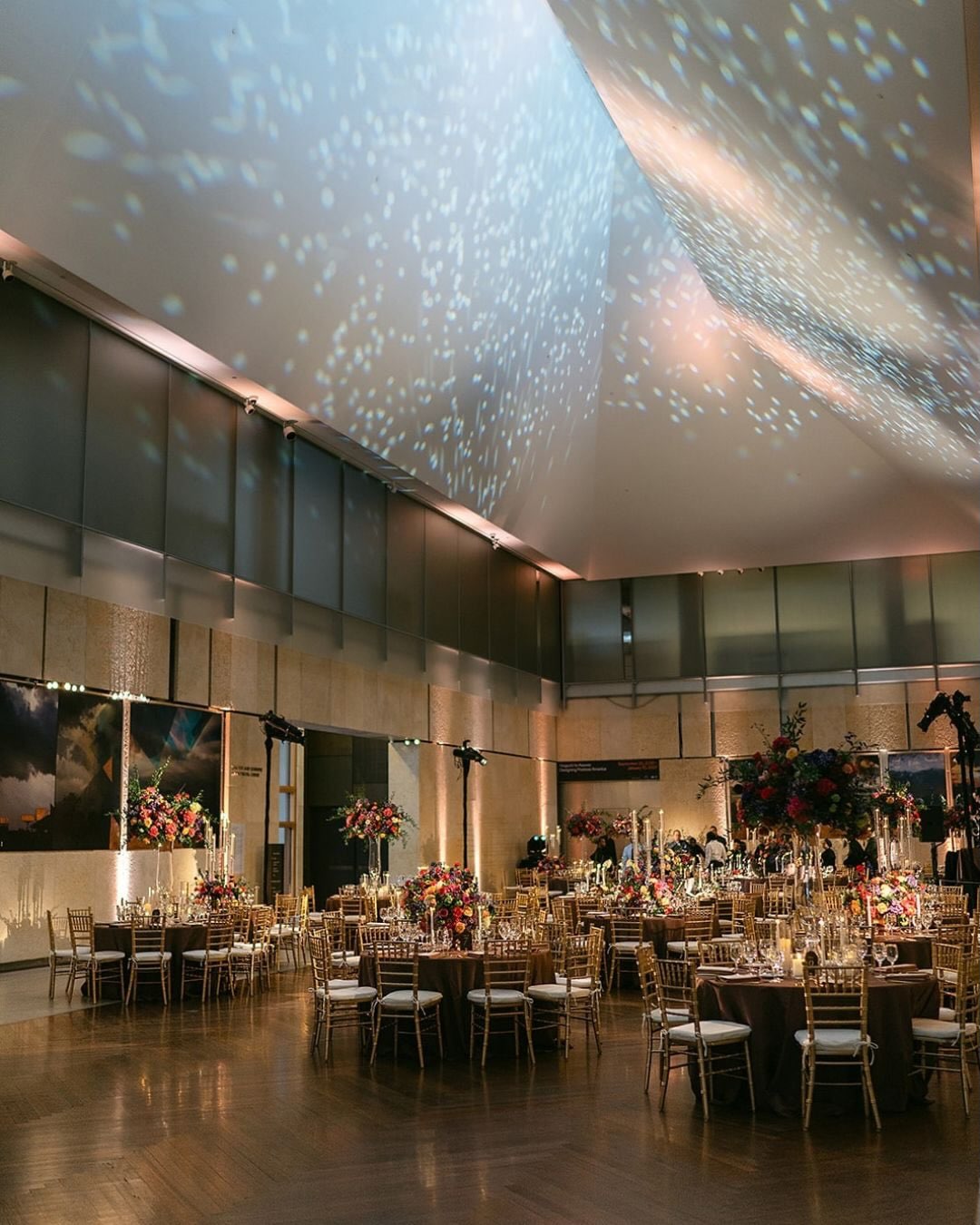
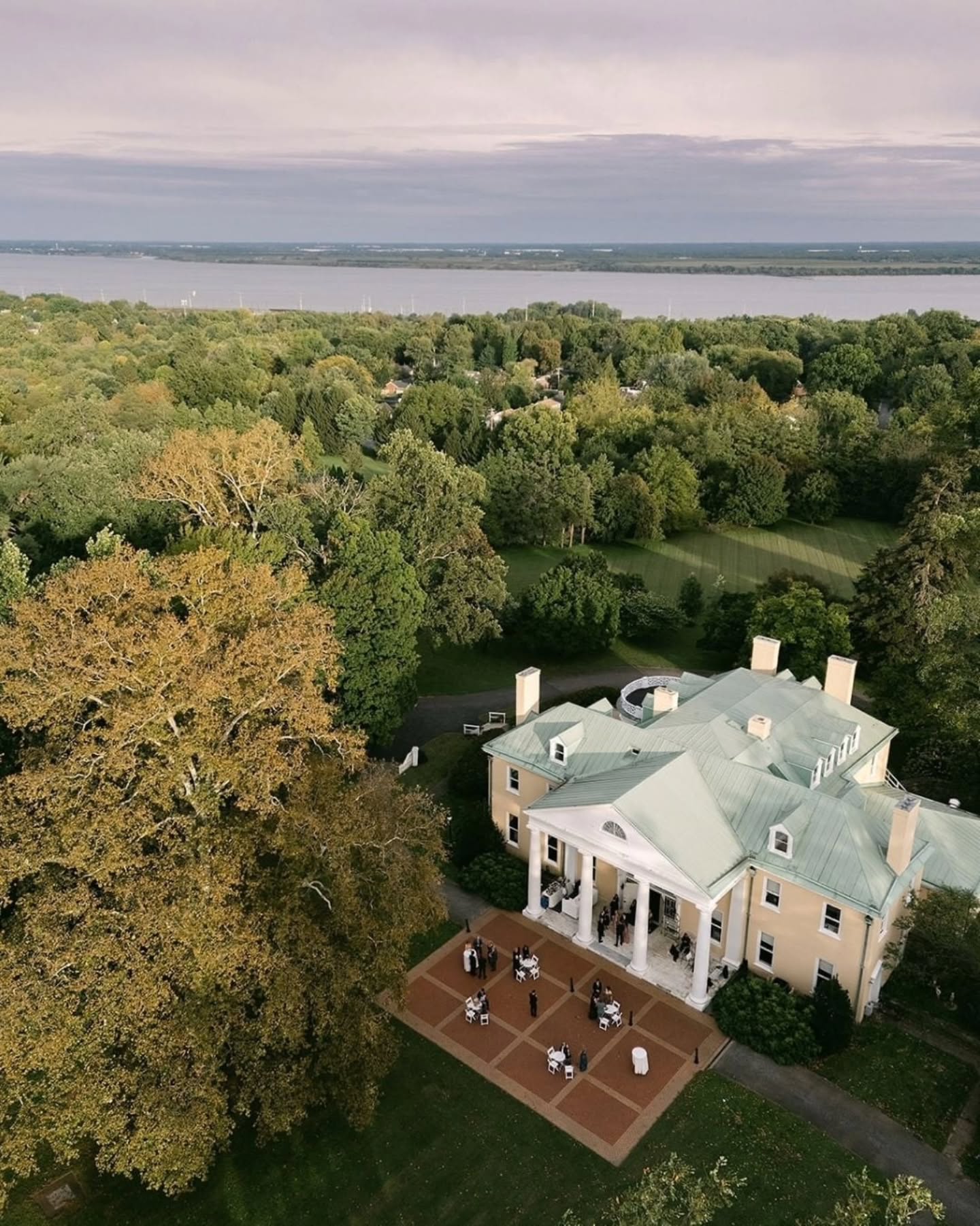
Style is not created in a vacuum. Space, light, access, weather, guest count, and timeline all shape what is possible.
An open garden
Gardens give people room to move and offer natural layers for documentary and fine-art images. They also change with sun, wind, rain, temperature, and season. Midday may require shade or stronger direction. Sunset may reward a short protected portrait window.
A greenhouse
Greenhouses offer structure, reflections, and natural light, but they can mix cool daylight, direct sun, warm fixtures, and reflected green. Documentary moments may unfold beautifully there, while formal groups need careful placement so faces are evenly lit and the space does not become a traffic jam.
A dark church or ceremony space with restrictions
If flash is not allowed and movement is limited, the photographer's technical judgment matters more than the style label. Documentary coverage may be the only respectful approach during the ceremony. Editorial work can happen before or afterward in a permitted space.
Why do most couples want a blend?
A wedding asks different things from a photographer at different times.
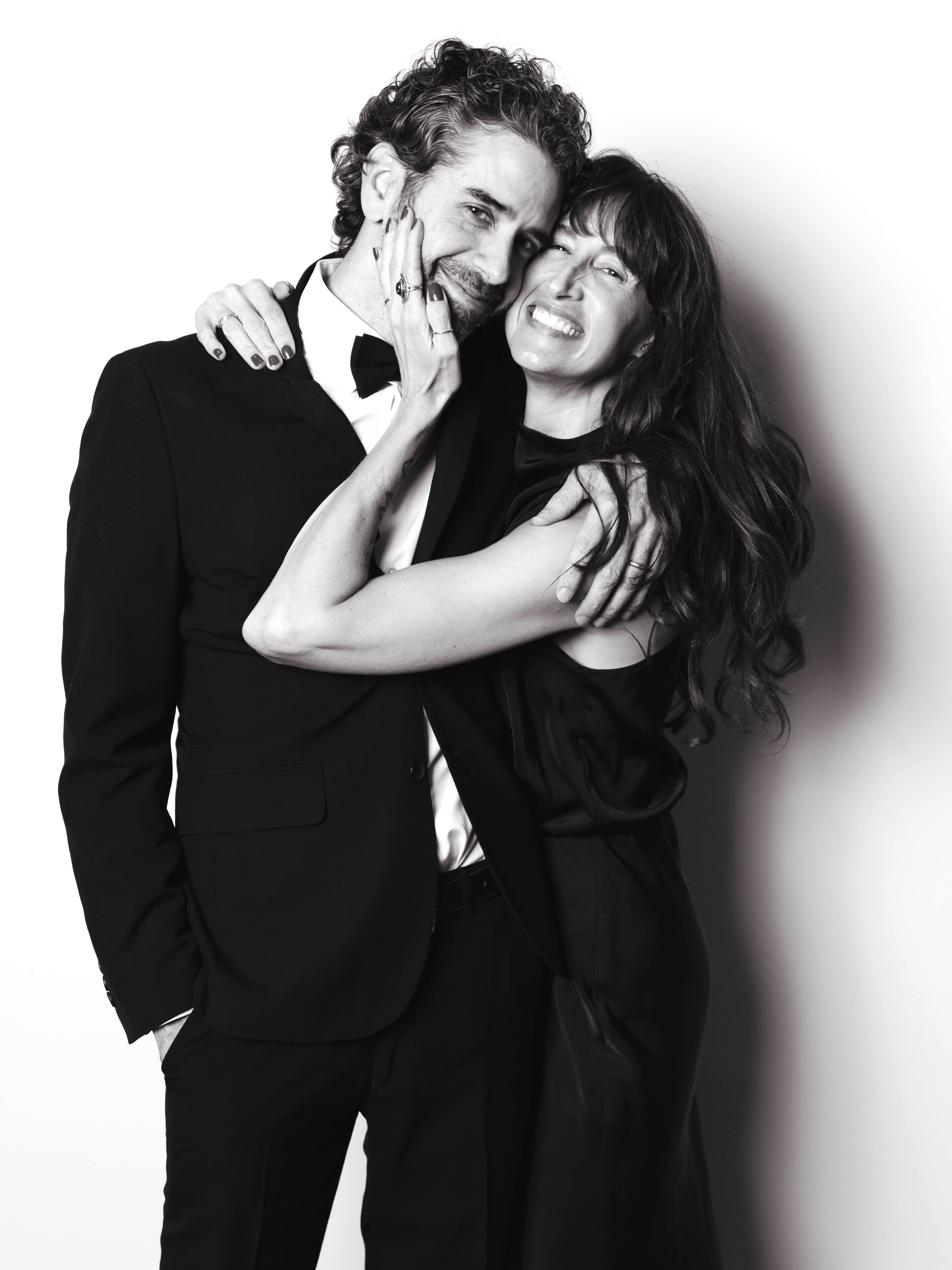
During a ceremony, most couples want truth and restraint. During family formals, they want speed and clarity. During couple portraits, they may want enough direction to stop thinking about their hands. During the reception, they want the photographer inside the energy without turning the dance floor into a set.
That is already a blend.
The mistake is asking a photographer to be “mostly documentary with some editorial and a few traditional photos” without describing what those words mean to you. Two photographers may hear that sentence and imagine entirely different days.
How should you describe your preferred style during a consultation?
Use situations instead of labels. For example:
We want the ceremony, cocktail hour, and reception observed without repeating moments. We want family formals to be organized and efficient. We would like 15 to 20 minutes of guided couple portraits that feel active rather than stiff, plus two or three more composed editorial frames if the timeline and light support them.
Then add what you do not want:
We do not want to spend all of cocktail hour posing, and we do not want fake getting-ready moments recreated after the fact.
Show complete weddings, not a board of unrelated favorite images. Point to the frames that feel like you and explain why. “We like this because they look relaxed even though the composition is intentional” tells a photographer much more than “We want candid photos.”
Ask how the photographer shifts between observation and direction. Ask how much time their strongest portraits require. Ask what they do when a couple freezes, a room is dark, or a timeline loses 30 minutes.
Where does M2 sit?
Our foundation is documentary and photojournalistic. Those approaches overlap in a healthy way for us and make up the majority of how we photograph a wedding. We pay attention to people, energy, movement, and the moments that almost everyone else misses. We do not want a wedding to become a photo shoot with a ceremony attached.
We are also not passive. The balance changes with the couple's preferences, the people in front of us, and the specific moment we are photographing. During portraits, we guide where to stand, how to use the light, and how to connect physically. Then we create interaction and let the photograph move away from the setup. For a couple who feels unsure, we give more support. For a couple whose natural rhythm is already visible, we give more space.
Our fine-art instincts may appear while we photograph details, getting ready, bridal portraits, or a quiet couple portrait. Our editorial side may appear during couple or wedding-party portraits when stronger direction, a clean composition, unusual architecture, or deliberate light adds something. We do not apply the same percentage of each style to every couple, and we do not apply that level of direction to every moment.
For family formals, a traditional posed approach is useful. These photographs matter. We organize them, watch the relationships involved, and finish them without making everyone feel as if the wedding has stopped.
Across the full gallery, our editing is rich, authentic, and true to life. We embrace contrast, color, shadow, and atmosphere instead of forcing every room and season into the same pale formula.
We have learned this over more than 18 years of photographing weddings. The couples who tend to gravitate toward M2 care most about being fully present, enjoying the experience, and receiving real photographs that only become more valuable with age. A few fine-art or editorial frames can add range and beauty. Choreographing every image would cost the couple the people and moments that made the wedding matter.
We look through the lens as photographers, but also as a couple and as parents. That makes us aware of impermanence. Families change. Children grow. People age. The photograph that seems ordinary today may become the one that matters most later. Our work is wholly people-centered because weddings are not ultimately important for their surfaces. They are important because of who was there.
The blend changes because couples change. Venues change. Families change. Weather changes. The point of view stays consistent: presence over performance, people before trends, and photographs that feel like the day rather than a version of it invented for the camera.
Frequently asked questions about wedding photography styles
How can we tell a photographer's real style?
View several complete galleries, including one with lighting and logistics similar to yours. Watch how the photographer handles ceremonies, family groups, portraits, dark receptions, guests, and transitions. The complete work is more reliable than the label on the homepage.
If you want help deciding how much observation, guidance, and formal structure would support your wedding, reach out. We can show you complete M2 galleries and talk through how our approach changes across a real day.
The best photographers don't have one style. They have a point of view.
Choose a point of view, not a label.
Bring the moments, people, and visual priorities you care about. M2 can show how observation and direction change across a complete wedding.